

 Facebook
 X
X
 Pinterest
 Copy Link
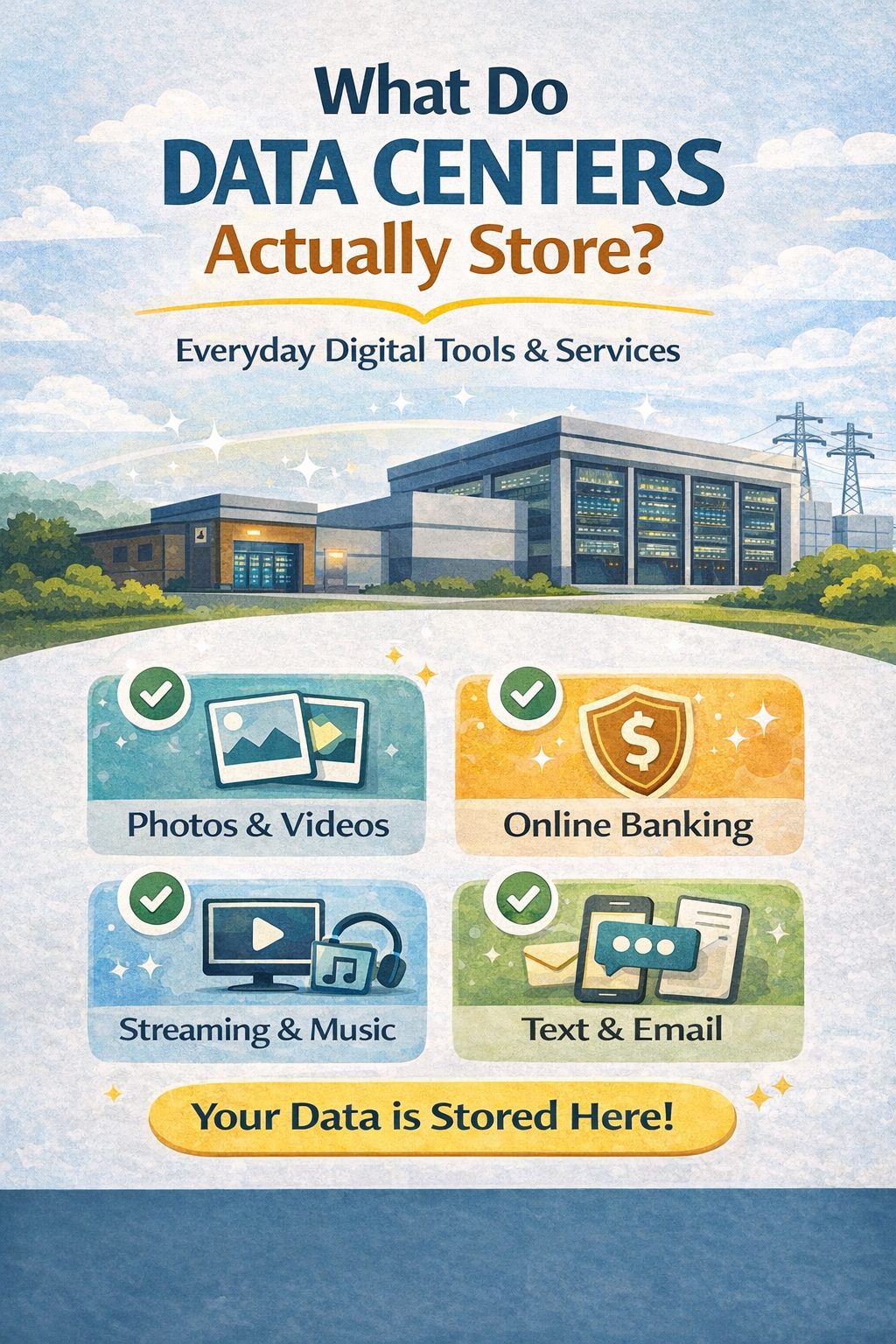
What Is a Data Center (In Simple Terms)?
A data center is a secure building filled with powerful computers (called servers) that store, process, and deliver digital information. Instead of your photos, emails, or streaming movies living “in your phone,” most of that information actually lives in a data center somewhere in the world.
Any time you use the internet, there’s a very good chance a data center is involved.
What Do Data Centers Actually Store?
Data centers store far more than most people realize. Here are the main categories:
Personal Digital Life
-
Photos and videos from your phone (iCloud, Google Photos, etc.)
-
Emails and attachments
-
Text and messaging backups
-
Contacts and calendars
-
Documents saved to the cloud
Entertainment & Streaming
-
Movies and TV shows (Netflix, Hulu, Disney+, etc.)
-
Music libraries (Spotify, Apple Music)
-
YouTube videos and podcasts
Financial & Business Information
-
Bank account records and transactions
-
Credit card processing
-
Mortgage and loan data
-
Tax filings and financial software
-
Business cloud platforms and records
Everyday Online Activity
-
Social media profiles and posts
-
Search engine data
-
Online shopping history
-
Maps and GPS navigation
-
Smart home devices (Alexa, Ring, thermostats, etc.)
Public & Infrastructure Systems
-
Healthcare records (in secure systems)
-
Government and municipal systems
-
School and education platforms
-
Weather and emergency alert systems
In short: a large portion of modern life runs through data centers.
How Often Does the Average Person Use a Data Center?
Most people interact with data centers dozens to hundreds of times per day, often without realizing it.
Common daily connections include:
-
Checking email
-
Sending texts or photos
-
Streaming music or shows
-
Using GPS navigation
-
Online banking
-
Scrolling social media
-
Shopping online
-
Asking a voice assistant a question
-
Checking weather or news
If you use a smartphone, you are likely connected to a data center throughout the day.
How Artificial Intelligence (AI) Is Increasing Data Center Use
Artificial intelligence is rapidly increasing how much we rely on data centers. Many everyday tools now use AI behind the scenes, and those systems require powerful servers located inside data centers.
Everyday Ways AI Uses Data Centers
You may be connected to AI-powered data centers when you:
-
Use Siri, Alexa, or Google Assistant
-
Receive email spam filtering or smart sorting
-
See recommended shows, music, or videos
-
Use predictive text or autocorrect
-
Search Google and get refined results
-
See suggested posts or ads online
-
Use photo recognition or face tagging
-
Translate languages online
-
Use AI writing, productivity, or image tools
Why AI Requires More Data Center Power
AI systems differ from traditional software. They:
-
Analyze enormous amounts of data
-
Learn patterns and improve over time
-
Perform complex calculations rapidly
-
Process requests from millions of users simultaneously
This requires high-performance hardware, advanced chips, and significant electricity, which is one reason data center demand is increasing worldwide. You can learn more in our upcoming post about why AI is increasing data center demand and infrastructure needs.
How AI Is Changing Everyday Technology
AI is reshaping tools we already use:
-
Search engines are becoming more conversational
-
Customer service is increasingly automated
-
Navigation apps predict travel more accurately
-
Online shopping becomes more personalized
-
Smart home devices grow more responsive
As AI expands, data centers play an even larger role behind the scenes.
Where Are Data Centers Located?
Data centers exist worldwide and are often built:
-
Near reliable power sources
-
Close to internet infrastructure
-
In cooler climates to help with cooling
-
In both rural and urban areas depending on land and connectivity
Many people live near one without realizing it.
Why This Matters to Everyday Communities
Understanding what data centers store helps explain why communities are discussing them more frequently.
Data centers:
-
Support modern communication and technology
-
Enable remote work and digital business
-
Power streaming, banking, and cloud storage
-
Require significant electricity and infrastructure
-
Can influence land use and long-term planning
If you’re interested in a deeper look at community impact, you can read more about the data center pros and cons in our previous post.
Technology projects like data centers can shape utilities, growth, and long-term planning, similar to other major local development and infrastructure projects.
The Bottom Line
From photos and banking to streaming and AI-powered tools, data centers support a large portion of everyday life. Most people now connect to data center-powered systems many times each day, often without ever seeing them.
As digital technology and artificial intelligence continue to grow, the role of data centers will likely grow with it.


